Seth M.R. Jaipuria School, Vineet Khand, Gomti Nagar
- Lucknow, Uttar Pradesh, India
- The Indian school embedding conscious transformation to build emotionally resilient, self-aware learners
-
Seth M.R. Jaipuria School, Vineet Khand, Gomti Nagar, an independent kindergarten, primary and secondary school in Lucknow, Uttar Pradesh, India, is redefining how education supports students’ physical and mental wellbeing by placing emotional awareness, self-reflection, and inner development at the centre of its teaching philosophy. In high-pressure learning environments, many students are often expected to succeed without being equipped to understand themselves, manage their emotions, or navigate relationships, yet few schools provide the structured support to help them build these skills. The school is addressing the gap between performance and wellness by operating on the belief that education should enable children to understand themselves so they can consciously grow and succeed.
At the core of its learning model is a structured focus on inner development across four dimensions, physical, emotional, intellectual, and psychological, with wellbeing as the foundation. Students practice daily gratitude exercises and reflective rituals, guided by teachers, to pause, regulate and reconnect with themselves. These practices are then embedded throughout the day to shape a calm, focused and emotionally aware space for learning. This approach changes the role of the teacher, who, along with teaching conventional subjects, also integrates values like humility, compassion, and gratitude into everyday learning.
A defining element of this structure is the Personal Transformation Project, a journey undertaken by every Grade 8 student since 2011. Over a period of 7 months, each student identifies a personal challenge and works to consciously transform it through reflection, action, and feedback. Other consciousness-driven initiatives include projects where students learn about herbal medicines and plants and explore different Indian personalities. A mindfulness strategy called ‘Silence Time’ takes place four times a day, where organ music is played, and students from nursery right through to high school enter a state of conscious stillness that brings calm across emotional, physical, and mental levels.
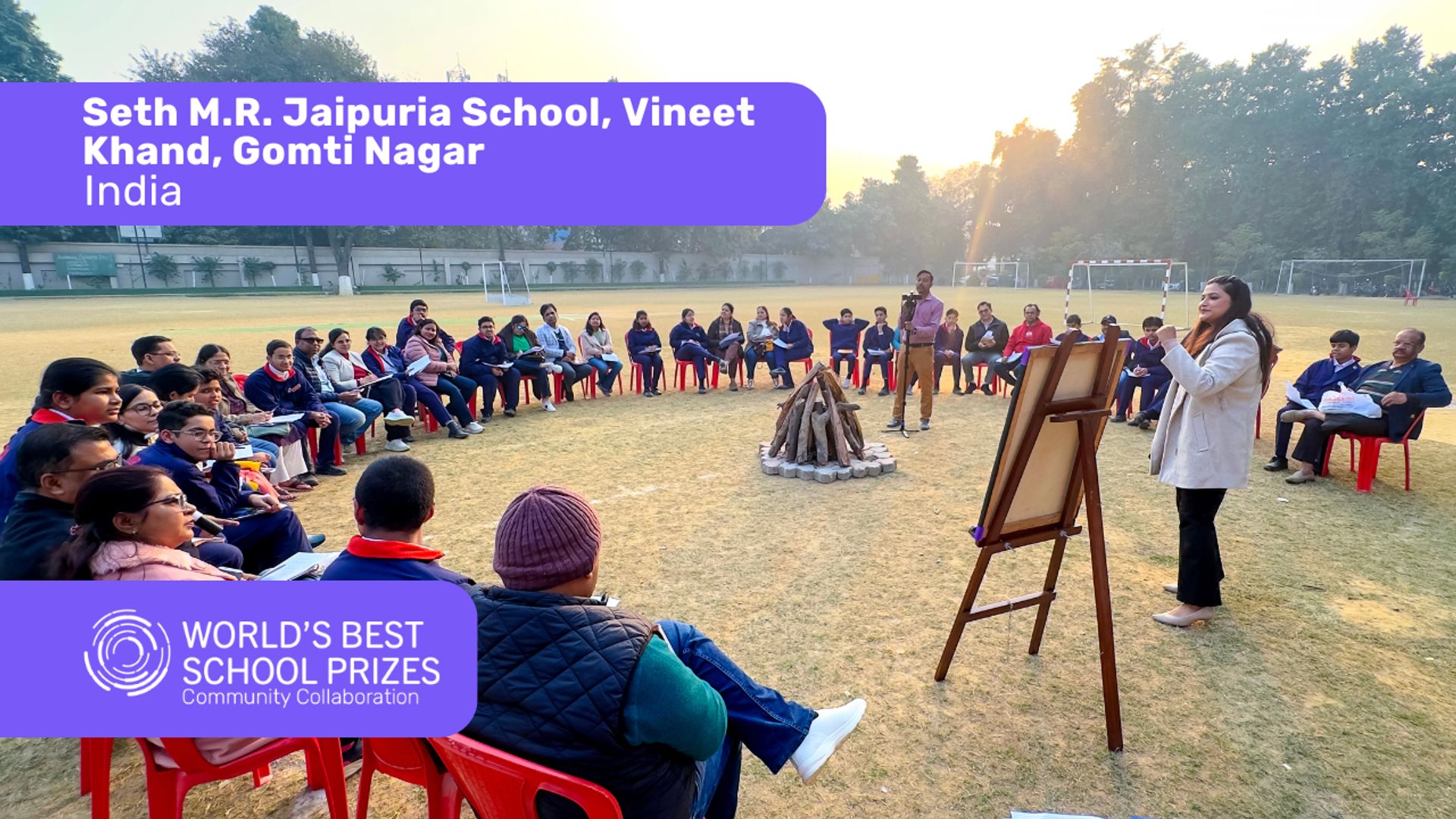
Technology plays an important role in learning, ensuring that students can develop their skills while maintaining personal balance. A recent technology-led initiative saw students create a device to support visually impaired people in their daily shopping.Through structured dialogue sessions called SMRJ Samvaad, involving parents, grandparents, and students, families come together to address communication gaps, resolve conflicts, and build mutual understanding. As one community, they are addressing the growing issue of excessive screen time, including video games, reels, and social media. Students are gradually shifting their focus away from digital distractions and towards family time, reading, sports, and other meaningful activities that had been neglected.
What makes school’s work distinctive is how it extends into the home. Through structured dialogue sessions between parents and students, families come together to address communication gaps, resolve conflict, and build mutual understanding. These sessions create a safe space where both sides are heard, strengthening relationships that directly influence a child’s emotional wellbeing.
Since 2011, every Grade 8 student has completed a year-long Personal Transformation journey, reaching over 4,500 learners who have each documented a process of self-driven change. The school consistently exceeds national benchmarks, with ISC Grade 10 averages of 88.73% in 2024 and 89.22% in 2025, and a Grade 12 average of 86.7%, and 87.9% in 2026, while ISC Grade 12 averages stood at 86.7% with most subject results up to three times higher than the national average. Students carry these outcomes beyond school, with many alumni returning to share how they continue to apply these practices in their personal and professional lives. The approach is also driving strong teacher retention, as more educators are attracted to the benefits of this conscious culture.
The success of the learning model is widely influencing education policies. The Indian School Certificate has selected the school to pilot its practices across other institutions, including training educators from other institutions, positioning the school as a catalyst for change at a national level.